
Basic knots · Lesson 17 of 18
Chinese Lucky Knot: Four-Loop Good Luck Knot
Tie the four-loop Chinese lucky knot with a pinned layout, real demonstration and eight step images. Follow both arrangements and dress the loops gradually.
四耳吉祥结
The finished four-loop lucky-knot variant
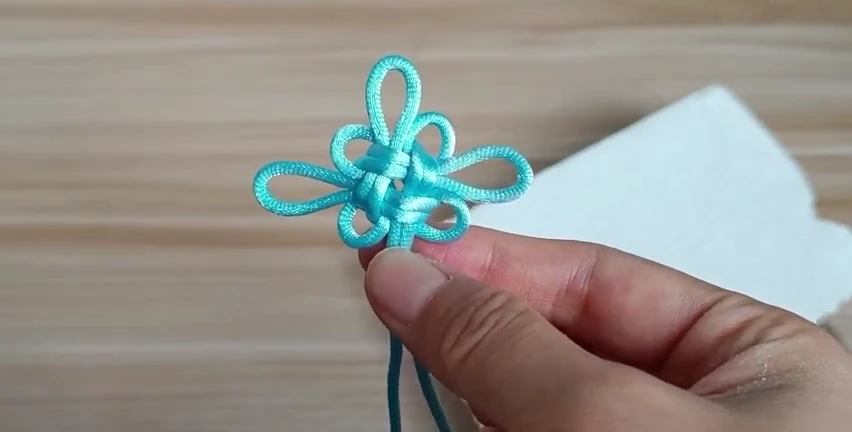
2:40 demonstration. Pause and repeat each movement at your own pace.
Follow the cord, step by step.
Each image comes from this demonstration. Tap its time to replay the movement.
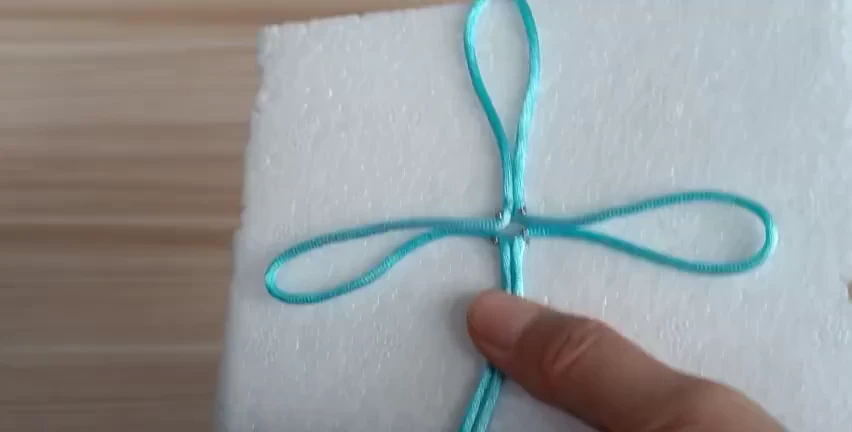
01. Set the cross-shaped layout
Pin the upper, left and right loops on the foam board. Leave the paired lower strands as the fourth working section.
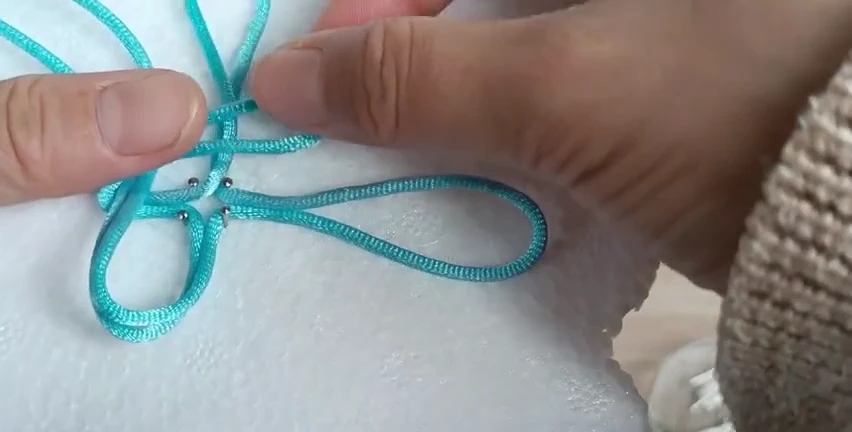
02. Continue the loop folds
Bring the loop sections across the pinned center in the order shown. Keep the lower bend and the remaining open loop visible.
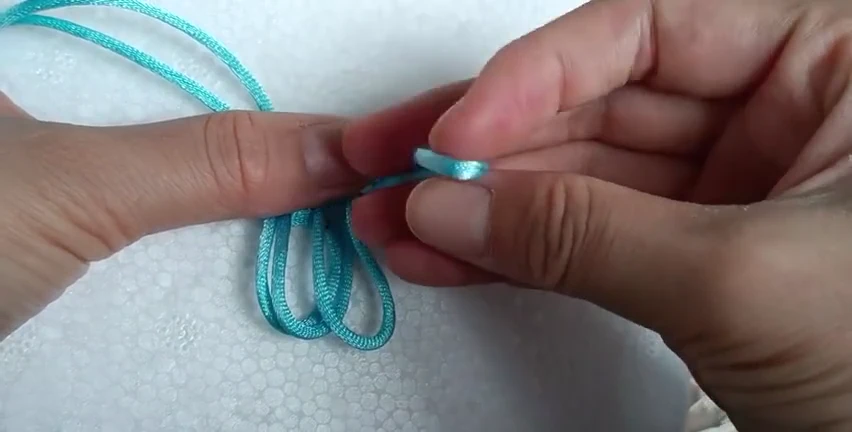
03. Complete the loose weave
Guide the remaining section through the demonstrated opening. Replay 27–47 seconds to see the entry behind the fingers before reducing the loops.
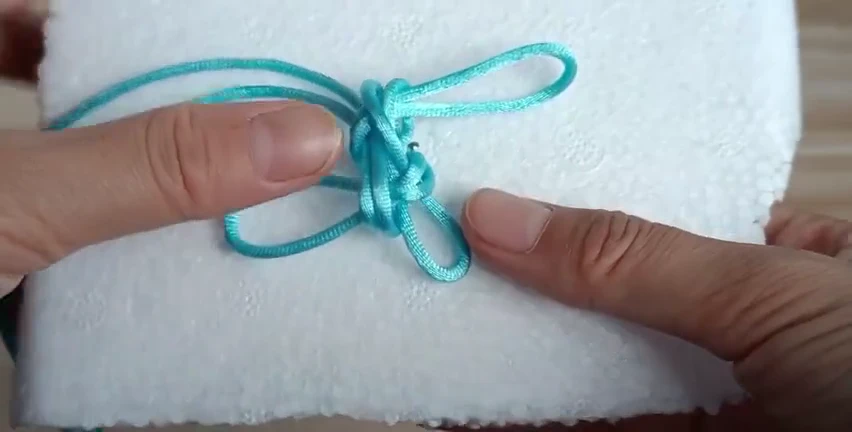
04. Inspect the first center
The first center is held together on the board. Check that the loop sections still surround it and that none was pulled completely through.
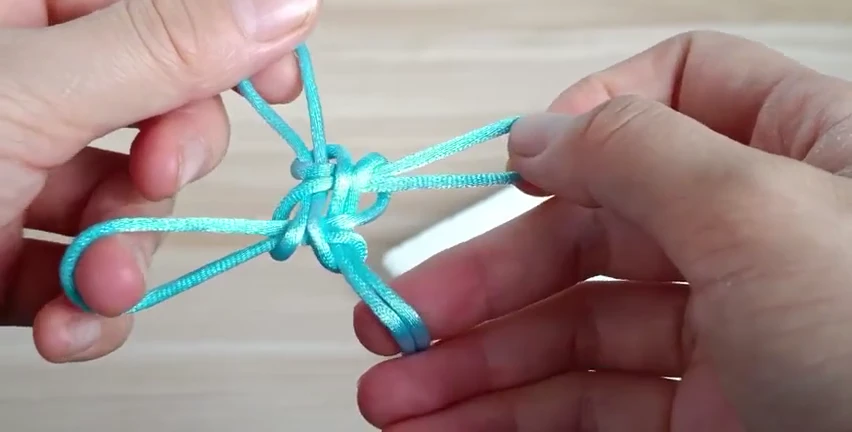
05. Open the knot off the board
Remove the pins and spread the main loops while holding the center. Keep the weave loose enough to follow the off-board adjustment.
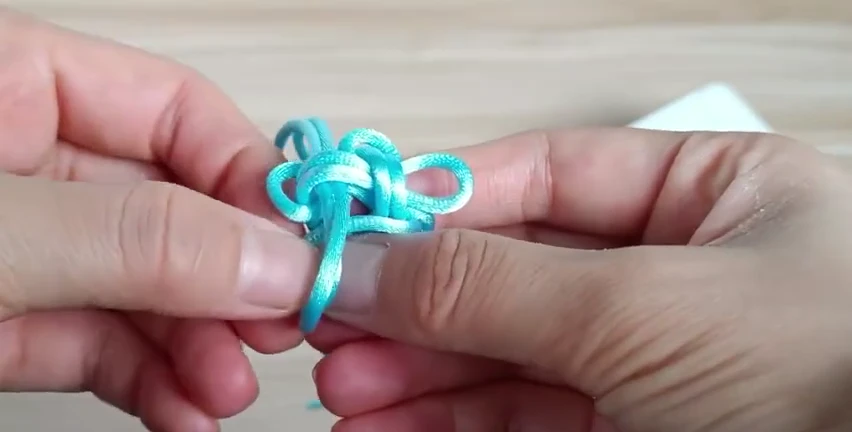
06. Dress the second arrangement
Continue the shown off-board sequence and begin seating the crossings together. Use 83–111 seconds for passages hidden by the hand.
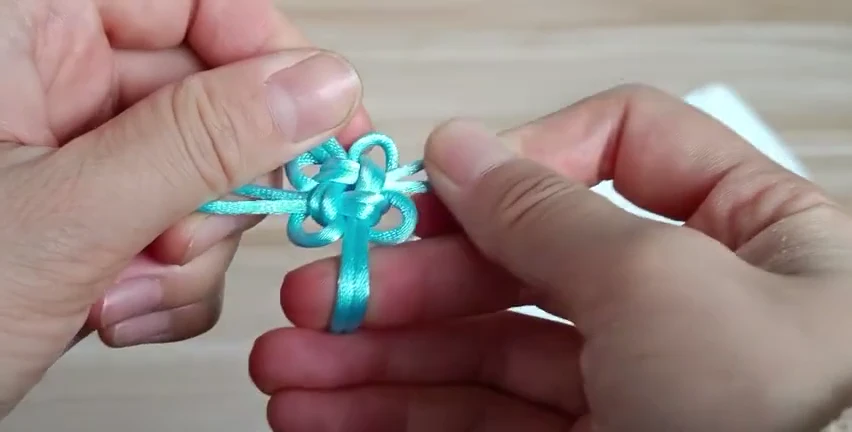
07. Balance the outer openings
Adjust the main ears and the smaller edge openings around the center. Pull slack through neighboring sections in small amounts.
08. Check the four-ear outline
Compare the four main ears, woven center and small intervening openings with the demonstration. Even out the left and right ears and let the tails hang together.
Before you move on
- Four main ears frame the finished center.
- Smaller edge openings are present between the main ears.
- The left and right main ears are visually balanced.
Tighten and shape gradually
- Start with the three pinned loops and paired lower strands at step 1. Keep each section distinct as the folds pass across the center.
- Check the first weave at steps 3–4 before pulling smaller. A loop pulled completely through cannot serve as an outer ear.
- At steps 5–6, work through the off-board arrangement. Replay 1:23–1:51 for passages briefly hidden by the hand.
- At steps 7–8, move slack between neighboring sections with small pulls. Balance the main ears, then check the intervening smaller openings and let the tails hang together.
Common mistakes and how to fix them
- The center is tight before the second arrangement. Open the weave enough to follow steps 5–6. The final outline comes after the off-board sequence.
- An outer loop disappears into the center. Return to the loose weave at steps 3–4 and compare the section you pulled through before continuing.
- The left and right ears do not match. Use step 7 to move slack around the center, then compare the two main side loops. Do not try to make every small opening the same size as an ear.
Continue your practice
A few useful answers
Before you begin
What is a Chinese lucky knot?
In this lesson, Chinese lucky knot means the Ji Xiang knot (吉祥结), also called a good-luck knot. This four-loop variant has a woven center, main outer loops and smaller edge openings. It can accompany a personal wish on a handmade ornament.
Is the lucky knot the same as the endless knot?
These lessons teach different cord arrangements. The floral good-luck knot here is separate from the interlaced Pan Chang or endless knot taught in the finished-project collection.
Why do the loops become uneven as I tighten?
Pulling one loop or the tails too far can move the slack into a neighboring section. Hold the center, follow the cord to the next crossing and move a little slack at a time. Compare the main loops separately from the smaller edge openings.
Does a good-luck knot need to be red?
This demonstration uses turquoise cord. Choose a color you can follow clearly while practicing, then select the colors and message for your own ornament.