
Basic knots · Lesson 10 of 18
Decorative Ba Zi Knot
Build the small, textured cord-end knot shown in this lesson by repeating a looped movement, then drawing the loose loops into the body.
八字结
1:42 demonstration. Pause and repeat each movement at your own pace.
Follow the cord, step by step.
Each image comes from this demonstration. Tap its time to replay the movement.
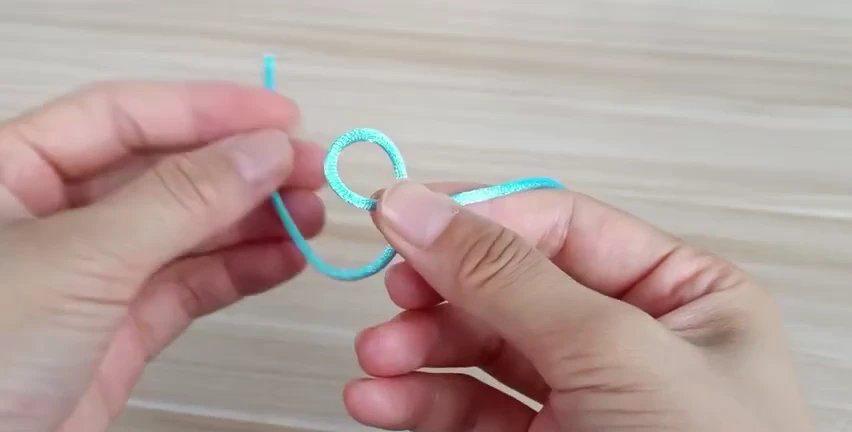
01. Leave an open starting loop
Fold the cord into a small upright loop. Pinch its base and leave enough loose cord to work without closing the loop.
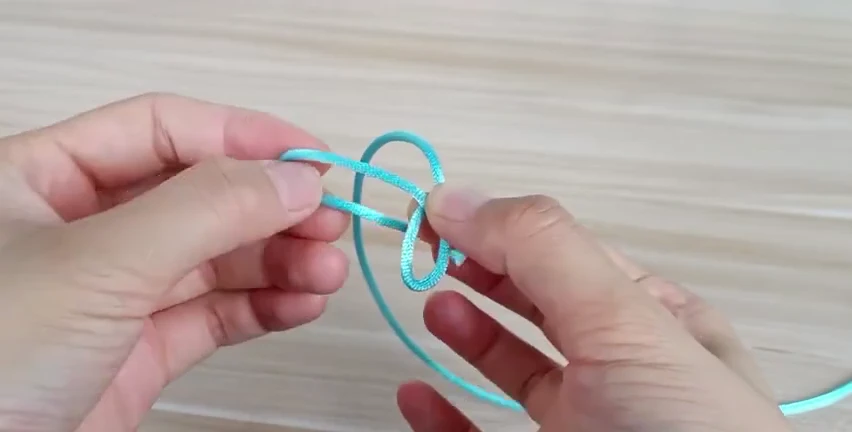
02. Bring the working cord across
Bring the loose cord across the front of the open loop, keeping the opening visible. Match this crossing to the video before pulling.
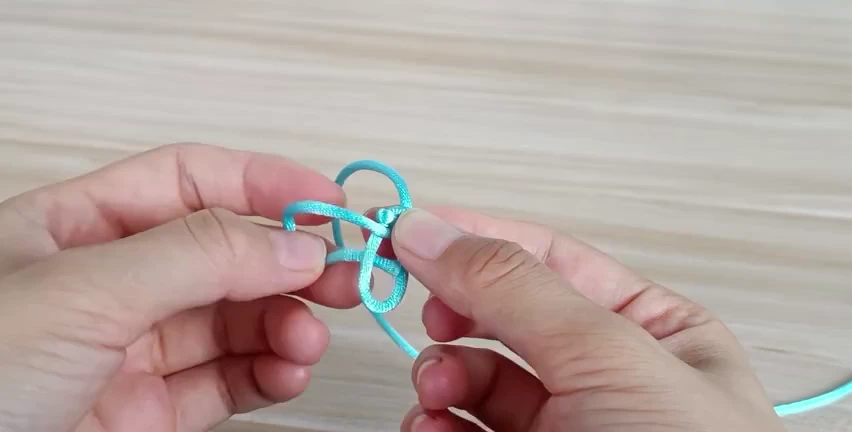
03. Repeat the looped movement
The next loose loop sits beside the upright loop. Follow the movement at 20–28 seconds to repeat the same small unit; the fingers briefly hide its entry.
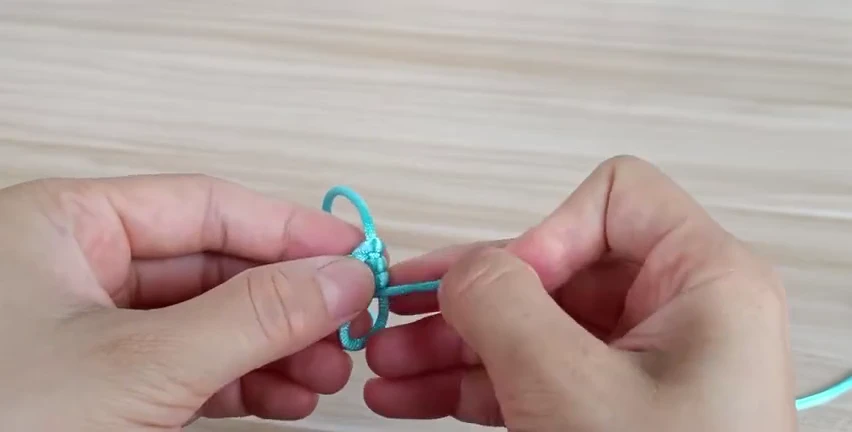
04. Build a short column
Keep adding the demonstrated units beneath the starting loop. Hold the completed column while leaving the new working loop loose.
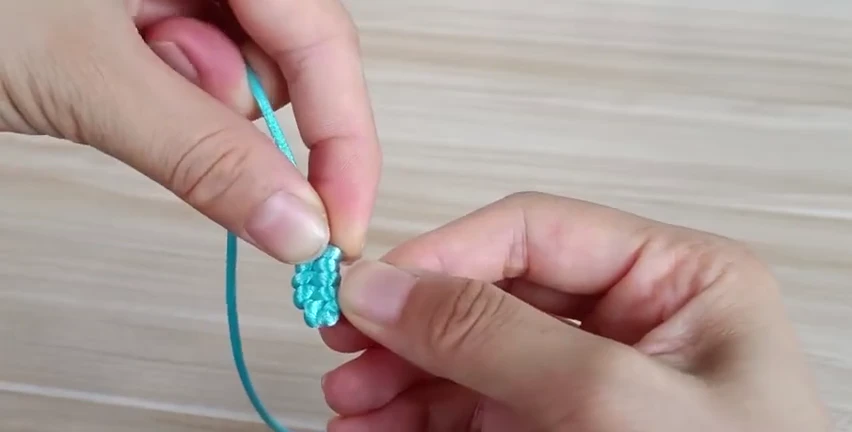
05. Draw slack out of the loops
Hold the textured body and pull the long cord in small increments. Watch the loose loop shrink into the knot instead of tugging the whole body at once.
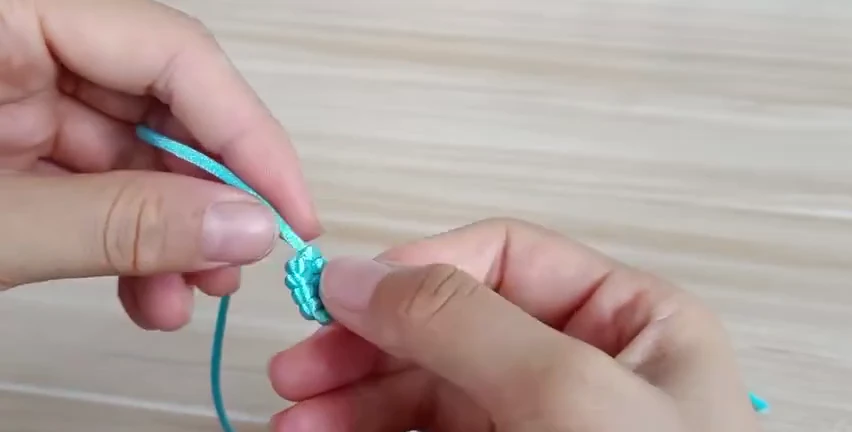
06. Set the compact shape
Tighten the remaining slack and pinch the sides to seat the units. Compare the small column with the demonstrated shape before trimming any end.
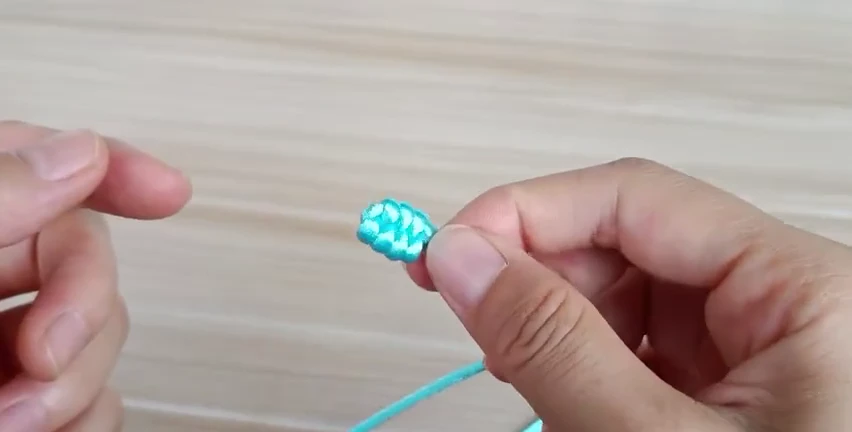
07. Inspect the finished end
Check the compact textured body and the cord leaving its base. The source trims and heat-finishes an end after tightening; those finishing actions are outside the knot-path diagram.
Before you move on
- The body is compact, with the repeated units seated together.
- No large temporary working loop remains beside the body.
- The long cord exits from the base without a loose surrounding wrap.