
Prepare a visible loop
The overhand knot is a basic single-strand stopper. Use soft cord and leave a working end long enough to grasp. In this lesson, the working end is the part you move; the standing part is the longer section you hold. Begin loosely so you can see what passes through the loop.
Three movements
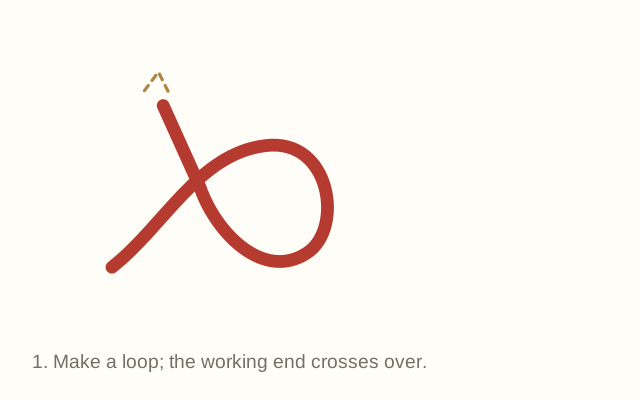
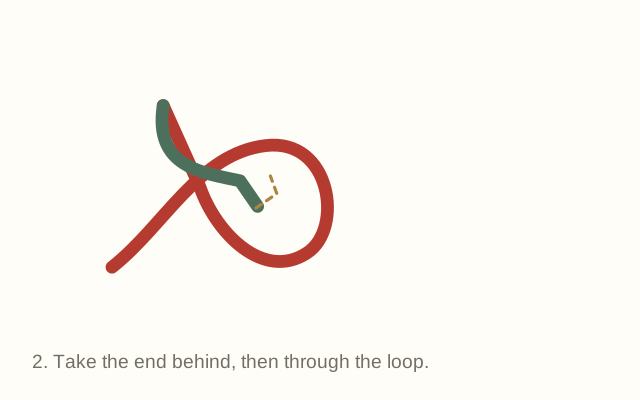
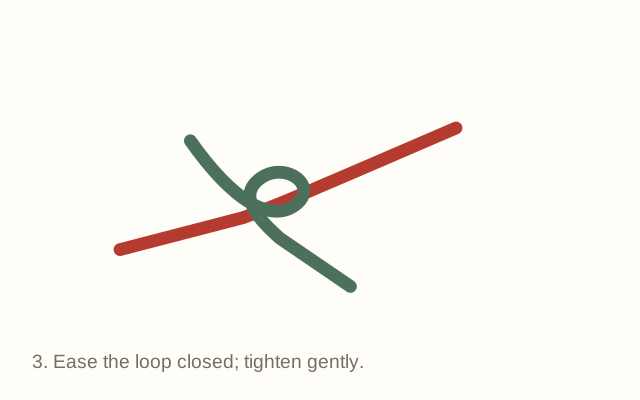
The drawings are original orientation sketches. Keep the loop open enough to follow the over-and-under movement while practicing.
Check before you tighten
Follow the working end with your finger: it should pass through the opening once. If the loop simply slides away, you may have crossed the cord without taking the end through it. Undo the attempt and make the opening larger. A contrasting marker or small piece of tape on the working end can help you follow it.
Practice on an offcut before placing the knot near a bead or a finished ornament. The overhand exercise teaches a basic movement; it is not a full Chinese decorative knot by itself.
Next small project
Continue with a square knot using two colors, or make a tassel for an ornament. Keep your practice knots for comparison: an open example is often more useful than a tightly finished one.