
Choose the length before wrapping
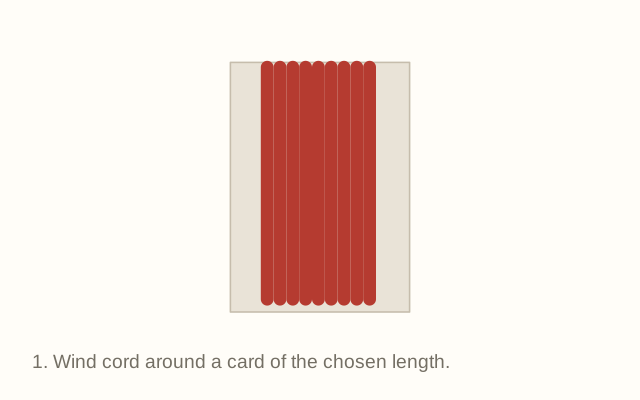
Cut a firm card to the approximate tassel length you want, for example 8 cm for a small hanging ornament. Gather soft cord or embroidery thread, a separate hanging cord and scissors. Make a small sample first: cord thickness and the number of wraps both affect the finished fullness.
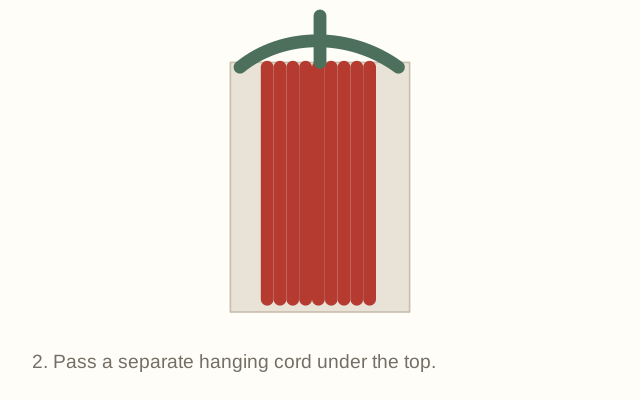
Our suggestion of 20–30 wraps is a starting experiment for fine thread, not a fixed recipe. Thick cord needs fewer wraps. Leave the hanging cord long until you have chosen its attachment point.
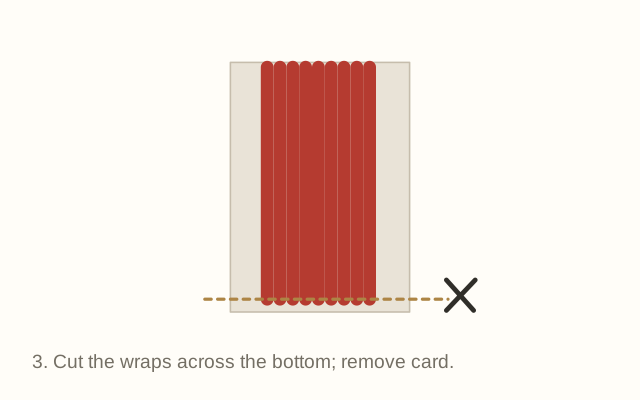
Wrap, tie, cut, finish
Get a more even finish
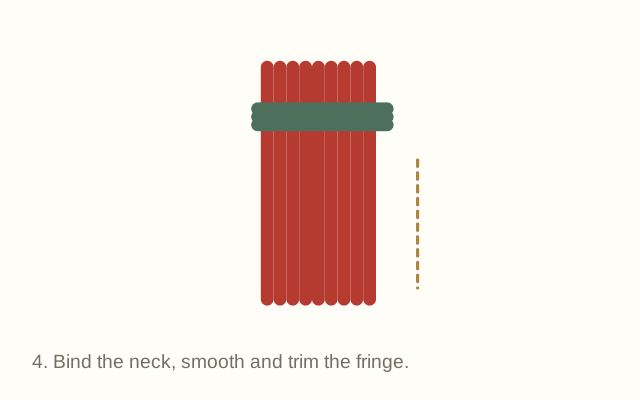
Do not trim the fringe while the strands are splayed on the table. Hang it from the top cord, smooth it with your fingers, then cut a tiny amount at a time. A neck binding too close to the top can look bulky; move it a little lower on your test sample if the proportions feel crowded.
For a pair of ornaments, wrap both on the same card and record the number of wraps. Match the final length after trimming, rather than assuming equal wrapping produces identical fringes.
Attach to a suitable ornament
Pass the hanging cord through a verified attachment loop or tie it to a light craft object. Test the attachment with the ornament over a table before hanging it. This lesson makes a decorative tassel; it does not specify a structural fastening for heavy objects.
Compare proportions in the designer or print an ornament planning sheet. The screen preview gives visual ideas, while your sample tells you how the physical cord behaves.